I remember when you could sprinkle a handful of phrases across a page and grab top spots. Today the game changed: algorithms are smarter, and Google keyword research is closer to understanding user psychology than ticking boxes in a spreadsheet. If you plan to do SEO seriously, internalise the shift — search engines care less about phrase density and more about whether the page satisfies a concrete need (search intent).
Solid work always starts with the basics: a keyword is the bridge between a user's query and your content. To make that bridge hold weight, shore up fundamentals first — for example web development from scratch, because technical health shapes how search engines read your semantics. Shaky code means even perfect phrases will not lift the project to #1.
Where high-quality semantic research really begins
In my projects the hardest part was never collecting phrases — it was filtering them. Beginners often chase ultra-competitive head terms and forget the long tail. To show the difference: instead of a broad query like "buy laptop", it is usually smarter to target "buy gaming laptop with RTX 5090 for 3D work". Precision beats volume.
For a baseline I still recommend Google's official planner — it remains a reference for traffic ranges and lets you do Google keyword research free with first-party data. Do not stop there: deeper query analytics surfaces niches the default planner quietly skips. Pair official data with third-party tools for the full picture.
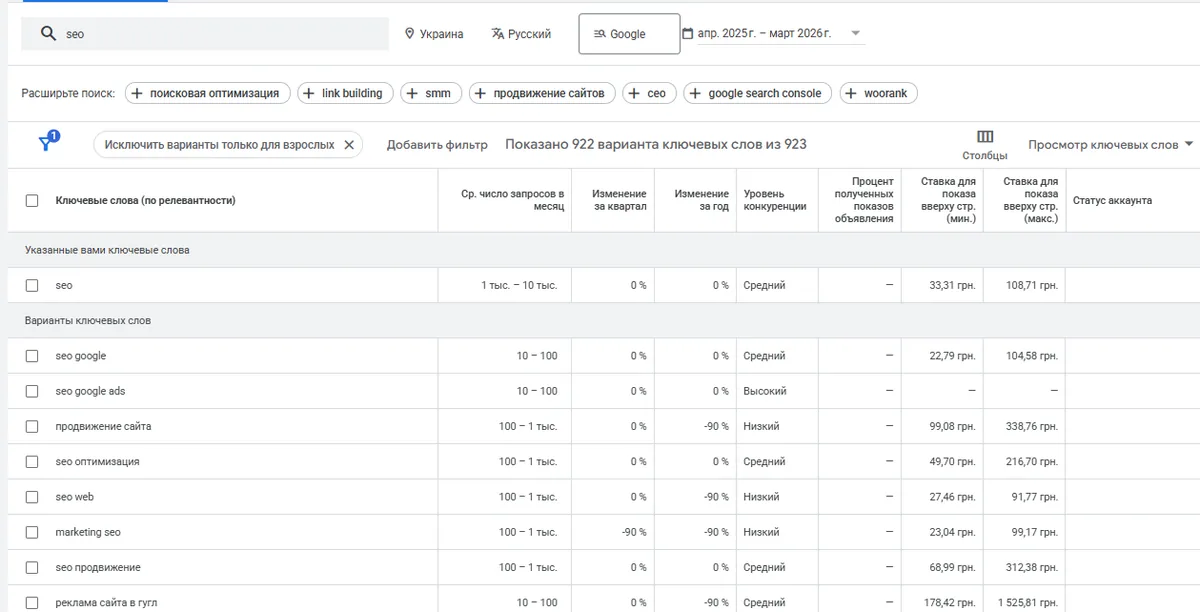
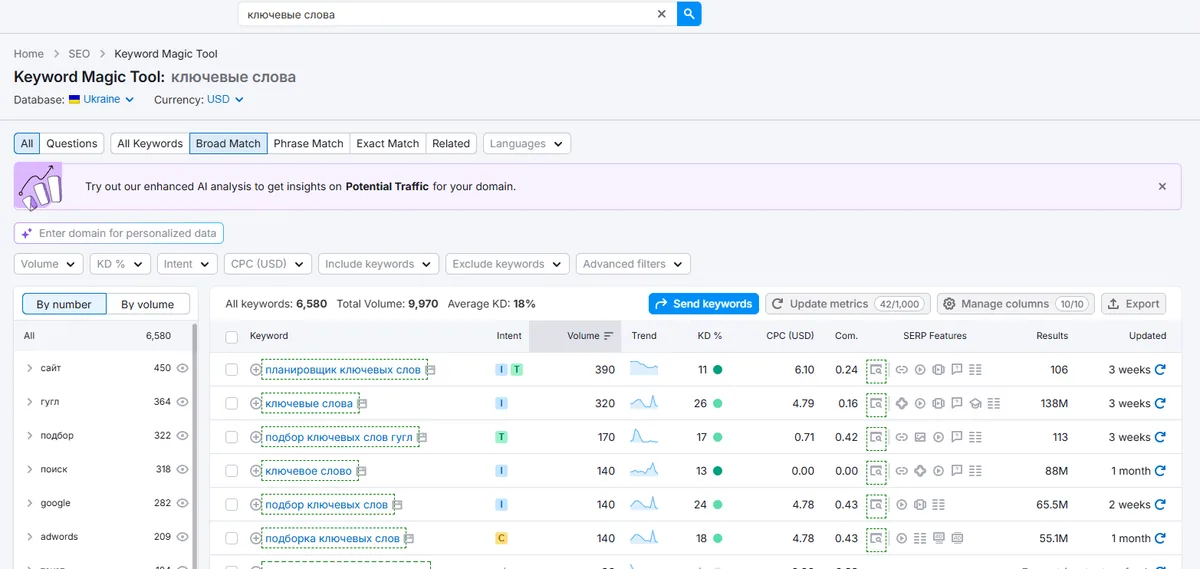
Extra granularity helps you uncover LSI-style phrases competitors routinely miss.
Writing mechanics that still matter
Once you have a list, the question is how to use keywords in an article. Keyword density mattered years ago; in 2026 it is secondary. Primary focus is the semantic field — related terms that prove expertise. In my experience, brute-forcing exact matches triggers spam signals, not growth.
I watched a client insert "Google keywords" into every other sentence. Rankings collapsed about forty positions in a week. Integrate phrases naturally. The table below contrasts legacy tactics with what works now.
| Parameter | Legacy (pre-2024) | Modern (2026) |
|---|---|---|
| Phrase usage | Verbatim repeats | Natural inflections and synonyms |
| Optimisation target | Head terms only | Intent-led and question-shaped queries |
| Copy length | "More words = better" | Concrete answers above the fold |
| Structure | Random headings | Clear hierarchy and structured data |
If you are still mapping the basics, read what SEO is and how it works first. Modern Google models context better than many writers. That is why it pays to study how Google ranks sites while AI overviews and SGE-style experiences reshape the SERP.
How to rank for keywords without burning the site
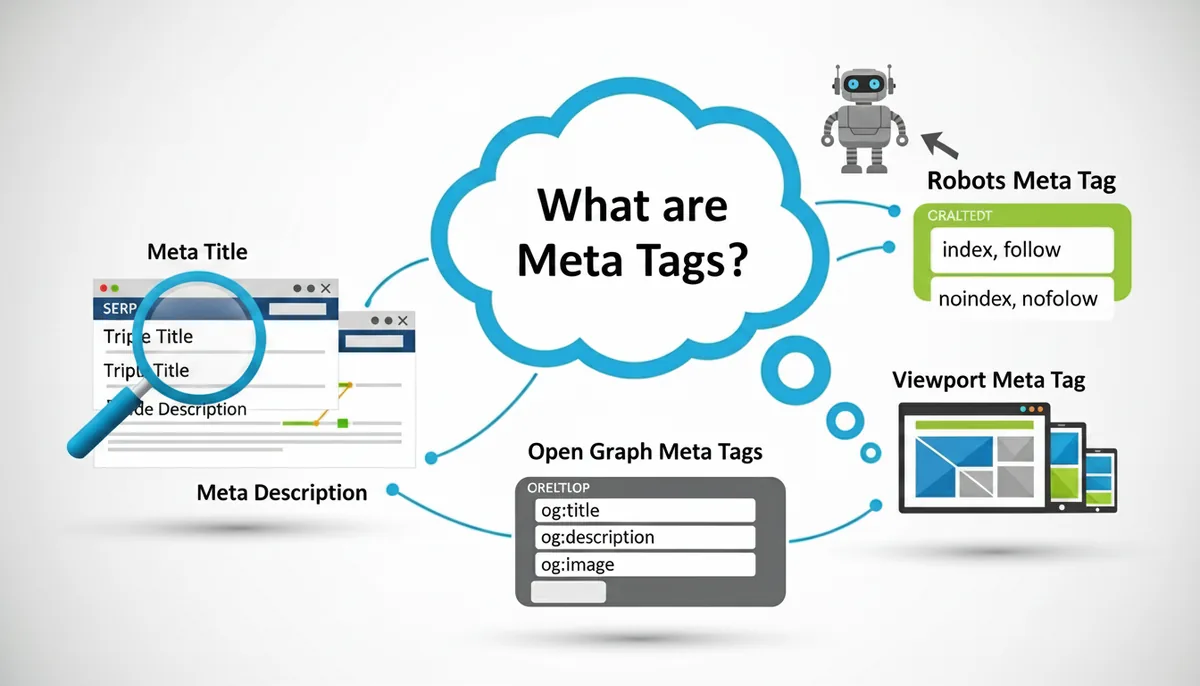
Promotion is a long game. Dumping keywords into meta tags alone will not help. Before you publish anything, learn how meta tags work and how to fill them — that guide saves preventable mistakes. After launch, monitoring takes over.
I routinely Google competitors by keyword to see which URLs they refresh. To keep the loop systematic, I use three steps:
- Refresh the semantic core on a schedule.
- Review on-page behaviour with heatmaps.
- Update copy for emerging queries and trends.
People often ask how to check rankings without expensive SaaS. Free tiers and Google Search Console are enough early on; serious programmes usually combine several sources and automate position tracking responsibly.
Visibility inside AI and instant-answer modules is becoming decisive for traffic in 2026.
FAQ
How often should you refresh keyword lists?
I run a full semantic audit about twice a year. In fast-moving verticals — gadgets, dev tools, releases — I review trends monthly. Markets move; old queries can stop converting overnight.
Do keywords in URLs still matter?
Yes. Short, readable URLs with the core term help both users and crawlers grasp the topic quickly. Avoid stuffing — three or four words is usually enough.
Can keywords alone rank a site?
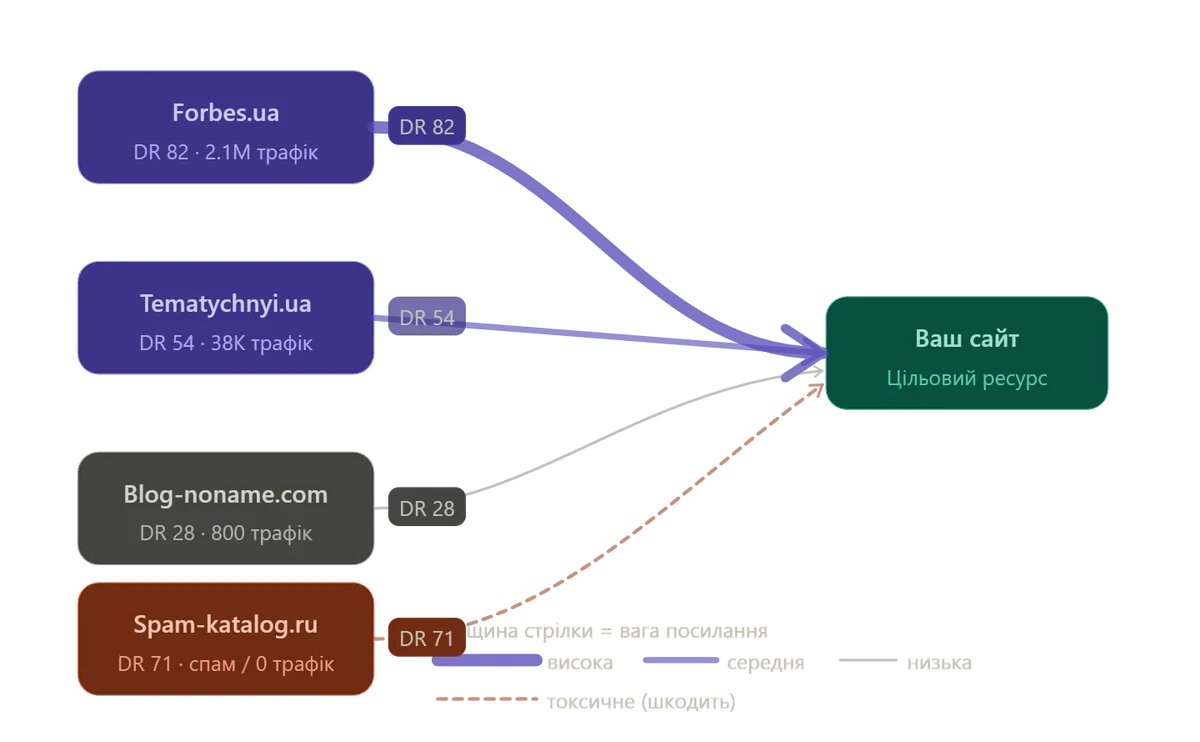
No. Without authoritative links, solid Core Web Vitals (think LCP around two seconds), and usable UX, copy will not carry the whole outcome. Text is one layer in a stack.
What if keyword density feels too high?
Stay calm, then replace exact matches with synonyms or pronouns. Read the paragraph aloud — if it sounds robotic, rewrite until it sounds human.
How do you handle queries with no search volume data?
Those "zero volume" ideas are often gold. If people ask the same thing in communities, publish the answer — dashboards lag real demand.
Should alt text include keywords?
Yes, when it describes the image honestly. Image search can be a meaningful traffic channel — do not ignore it.
How does AI search change keyword strategy?
Expect more conversational, full-sentence queries from voice and assistant-style interactions. Keyword strategy in 2026 means writing the way people actually talk.
Closing thought
Do not try to trick the algorithm. Write for humans and treat keywords as signposts that guide readers to the answer. Google ultimately rewards usefulness — not pages tuned for obsolete robot rules.

You may also like

Need semantic research or ongoing SEO support?
We cluster queries, align pages with intent, and ship changes without grey-hat shortcuts.